
WORKSHOP 1: Why Understanding Sustainability Fundamentals Changes Everything
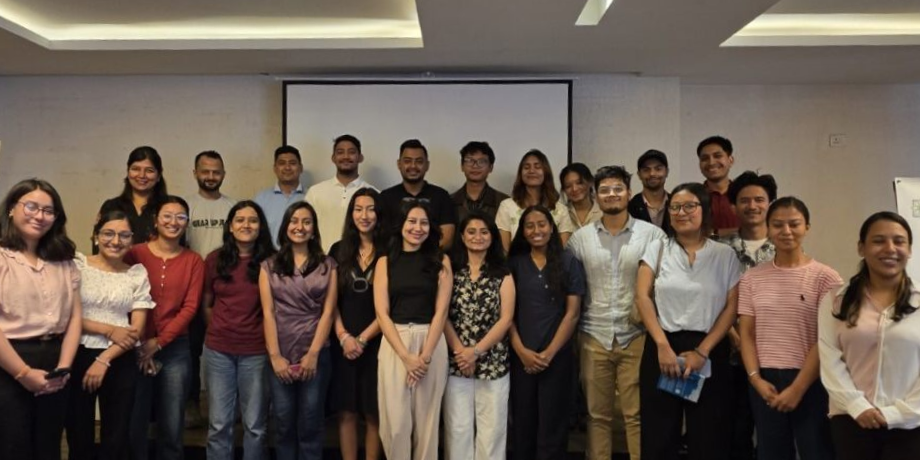
August 16, 2025
Most people have heard the word sustainability. Far fewer can explain what it actually means in practice, why it matters for business, or how to use it to drive real change. That gap is exactly what the first workshop of the Sustainability Mentorship Program 2025 was designed to close.
The Big Idea
Sustainability is not just about the environment. It sits at the intersection of three pillars: Environmental, Social & Governance. Every decision a business, government, or individual makes touches all three. When you understand how these pillars connect, you stop seeing sustainability as a compliance checkbox and start seeing it as a framework for making genuinely better decisions.
This is why we started here. Before you can solve a sustainability problem, you need to understand what one actually looks like.
Theory of Change: Because Good Intentions Are Not Enough
One of the most important things a sustainability professional can learn is that wanting to make a difference is not the same as making one. The Theory of Change framework teaches you to work backwards from the outcome you want and map out exactly what needs to happen to get there. It forces clarity and honesty. Without it, even well-funded initiatives end up doing a great deal of activity with very little real impact.
Design Thinking: Start With People, Not Solutions
Too many sustainability projects are designed around what experts assume communities need, rather than what those communities actually experience. Design Thinking flips that approach entirely. It starts with empathy and genuine understanding before a single solution is proposed. In Nepal’s complex social and environmental context, this is not just a useful approach. It is essential.
Why This Matters for Nepal Right Now
Nepal is at a turning point. The Environment Protection Regulation (2020), Nepal Rastra Bank’s ESRM Guidelines, and growing pressure from international investors are pushing businesses and institutions to take sustainability seriously and to do so quickly. The professionals who understand the fundamentals will be the ones shaping that transition.
What Participants Did
Working in five groups, mentees applied these frameworks immediately by building Problem Trees around real challenges in Nepal: vermicomposting, fast fashion, women’s education, occupational health and safety, and open spaces in Kathmandu. By the end of the day, abstract concepts had become practical tools.
The workshop received an overall participant rating of 4.54 out of 5.